
Current leaf wetness

Vista Bella Farm
Malagash Centre, Nova Scotia
Ecowitt apple scab and seasonal GDD monitoring for the Vista Bella Farm orchard block.
Ecowitt orchard disease tracking
Apple scab tracker
This page replaces the old notebook output with one generated page. It combines a primary infection view from the Mills wetness table and an ascospore maturity tracker based on cumulative degree-days from the configured biofix date.
Use this page as a scouting and infection-risk aid. Confirm orchard observations, spray history, product labels, and local guidance before making management decisions.
Trend chart
Compare the recent Ecowitt trend, current wetness context, and the live variable ranges behind this scouting view.
Current temperature
14.2 C
Ascospore degree-days
806.0 / 760
Recent Ecowitt trend
Choose one variable per axis and a time window to compare Ecowitt station history.
Time window
Left axis
Right axis
Time window: Last 24 hours
Left axis: Leaf wetness (%)
Right axis: Outdoor temperature (C)
Wetness threshold for event capture: 10%
Polling cadence: every 2 minutes
Short dry breaks up to 90 minutes are merged into one scab event
Ascospore biofix: 2026-04-23
Active leaf wetness event
Live severity estimate from the current Ecowitt wetness run.
Inactive
OMAFRA Primary: None
Mills Secondary: None
Duration: 0.0 hours
No active wetness event right now.The page will estimate severity again as soon as leaf wetness rises above threshold.
Latest completed event
Most recent finished wetness event severity summary.
OMAFRA Primary: None
Mills Secondary: None
OSU Ascospore: Peak release (772 DD)
Cluster span: 7.58 hours
Wet hours: 5.67

Fruit symptom reference
Apple scab on fruit
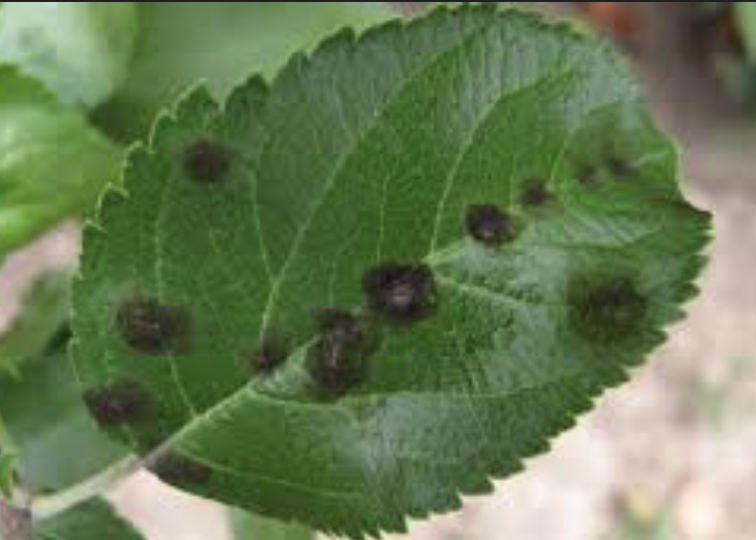
Leaf symptom reference
Apple scab on leaf tissue
Scab model assumptions
Set the biofix and displayed GDD window here. The page shows whether the default biofix or your manual override is being used.
Scab model assumptions
Set the biofix and displayed GDD window here. The page shows whether the default biofix or your manual override is being used.
Default biofix: 2026-04-23
Displayed degree-days: 806.0 / 760
Ascospore degree-days
806.0 / 760 GDD. Above threshold since 2026-04-23. Open for the seasonal accumulation chart, 760 DD target line, and prior-season threshold dates.
Ascospore degree-days
806.0 / 760 GDD. Above threshold since 2026-04-23. Open for the seasonal accumulation chart, 760 DD target line, and prior-season threshold dates.
Current biofix: 2026-04-23
760 DD target reached this season: 2026-07-10
Approximate mature ascospores at this GDD level: 100.0%
| Day | Daily GDD | Cumulative GDD |
|---|
| Season | Biofix | 760 DD Reached | Final GDD |
|---|---|---|---|
| 2026 | 2026-04-23 | 2026-07-10 | 805.7 |
Recent wetness events
Open to browse clustered scab events and compare the OMAFRA primary, Mills secondary, and OSU ascospore context for each wetness window.
Recent wetness events
Open to browse clustered scab events and compare the OMAFRA primary, Mills secondary, and OSU ascospore context for each wetness window.
| Start | End | Cluster Span (h) | Wet Hours | Dry Breaks (h) | Avg Temp (C) | Avg Wetness (%) | OMAFRA Primary | Mills Secondary Risk | OSU Ascospore |
|---|
Model notes
Reference notes for the primary and secondary Mills infection thresholds plus the seasonal ascospore maturity tracker.
Model notes
Reference notes for the primary and secondary Mills infection thresholds plus the seasonal ascospore maturity tracker.